
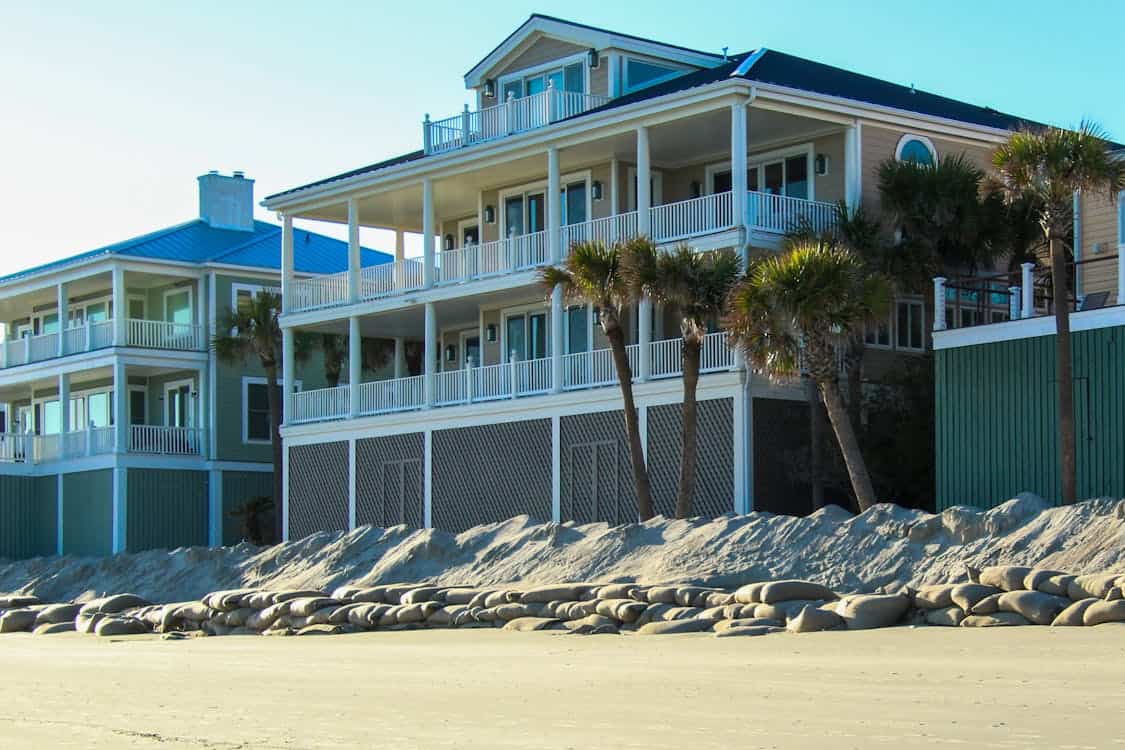

Every few years a single listing tells you more about a neighborhood than a stack of market reports. In Del Mar, that listing arrived this winter on Sandy Lane, a gated sliver of roughly a dozen houses sitting directly on the sand. When the renovated compound there surfaced asking $49.9 million, the headlines fixated on the number. The more interesting story was outside the walls.
Because what set the property apart was not the bedroom count or the imported stone. It was the way the outdoor space had been treated as architecture in its own right, with an oceanfront deck running the full width of the lot, an outdoor kitchen, a fire pit, heaters, and retractable shades all built into one continuous plane facing the water.
That is the through line in Del Mar’s highest tier right now. The house is the anchor, but the yard is increasingly where the money and the imagination go.
Why the Lot, Not the Floor Plan, Sets the Ceiling
Del Mar is a small market with an unusual constraint: there is almost no new land. Parcels tend to run compact, the village core is walkable and tightly held, and homes change hands rarely. That scarcity pushes the competition for prestige away from square footage and toward what a property can do with the ground it has.
On an ocean-facing lot, the single most valuable design move is protecting and framing the view. That is why infinity-edge pools keep showing up on hillside and bluff parcels. The visual trick of water meeting horizon only works when the deck, the coping, and the railing are engineered to disappear, which is a landscape and grading problem long before it is a pool problem.
Glass railings, low seat walls instead of tall planters, and terraced grade changes all serve the same goal. They keep sightlines open. In a community where the view is the asset, the landscape design either defends that asset or quietly wastes it.
The Sandy Lane deck is a clean example. By collapsing kitchen, fire, heat, and shade into one horizontal band at the sand line, the design refuses to interrupt the ocean with vertical clutter. That restraint reads as luxury precisely because it is harder to pull off than piling on features.
The Coastal Climate Quietly Dictates Materials
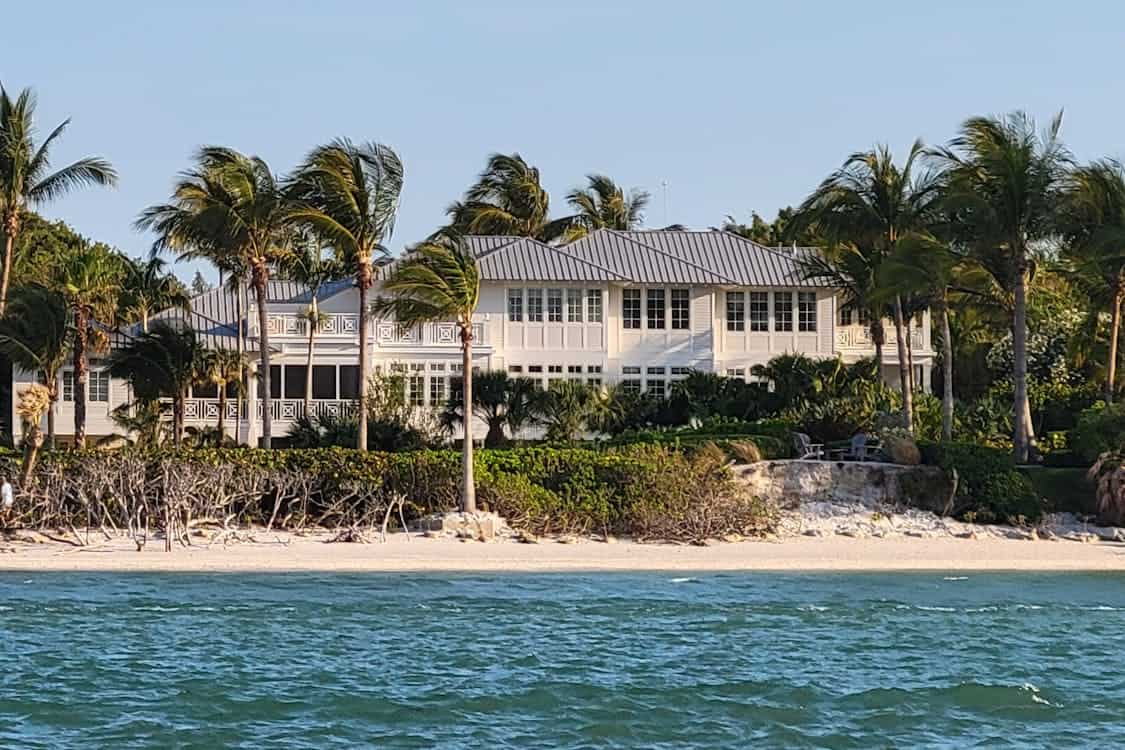
There is a reason travertine, limestone, and high-end concrete pavers dominate these projects. Salt air is punishing, and the marine layer keeps surfaces damp enough that the wrong material stains, spalls, or grows slick within a season or two.
Stone that stays cool underfoot matters on a south-facing terrace where people walk barefoot from pool to kitchen. Decking and railing hardware get specified in marine grades because anything less corrodes in plain sight. None of this is glamorous, but it is the difference between a yard that ages into patina and one that ages into a repair bill.
Planting follows the same logic. The estates that look effortless usually lean on drought-tolerant and salt-tolerant species, agave, lavender, coastal grasses, and native shrubs, arranged so they read as intentional rather than sparse. The mild climate lets these spaces stay usable nearly year-round, which is the entire point of investing in them.
Lighting is the last layer, and a telling one. Low-voltage path lights, tree uplighting, and soft fixtures around water features extend the usable evening without flooding the property in glare. On the coast, the goal is to make the yard feel inhabited after sunset without erasing the night.
Hardscape does the structural work beneath all of it. Stone patios, low seat walls, and well-built stairways define where people gather and how they move between levels, and on the larger estates those elements are what hold a sprawling outdoor scheme together. Natural materials like limestone, travertine, and granite recur because they survive the climate and read as permanent rather than trendy.
The newest wrinkle is wellness. A growing share of these properties now carve out a yoga platform, a cold plunge, or a quiet terrace tucked into a low-traffic corner, treating the yard as a place for health as much as entertaining. In a climate this forgiving, those spaces stay usable nearly the whole year, which is what makes them worth building in the first place.
What Trophy Listings Teach the Rest of the Street
A $49.9 million ask is not a normal transaction, and most Del Mar homeowners will never spend at that level. But aspirational listings function as a public design brief. They show the market what the current ceiling looks like, and a season later those same moves filter down into more modest renovations across the same zip code.
The lesson from this one is consistency. The deck, the kitchen, the fire feature, and the shade were not bolted on as separate purchases. They were composed as a single outdoor room with one material language and one orientation, toward the water. That coherence is what separates an estate-grade yard from a collection of expensive objects scattered across a lawn.
For owners thinking about resale, the implication is direct. In a supply-starved coastal market, a thoughtfully designed outdoor living space is one of the few upgrades that reliably moves the needle, because it is the part of the property buyers cannot easily replicate elsewhere in town.
The houses behind these yards will keep trading quietly, off-market and among a small circle. The yards, though, keep getting more ambitious, and the better ones increasingly look less like landscaping and more like the most-used room in the home.

 Bitcoin
  Ethereum
  Dogecoin
  Litecoin